Trees are one of the most valuable assets on a property, yet they’re also one of the most misunderstood. Many homeowners genuinely want to take good care of their trees, but outdated advice, internet myths, and “old-school” practices often lead to expensive mistakes. Over time, these misconceptions don’t just harm trees — they cost homeowners thousands of dollars in unnecessary removals, foundation damage, emergency services, and property repairs.
Let’s break down some of the most common tree care myths and explain what actually protects your trees and your budget in the long run.
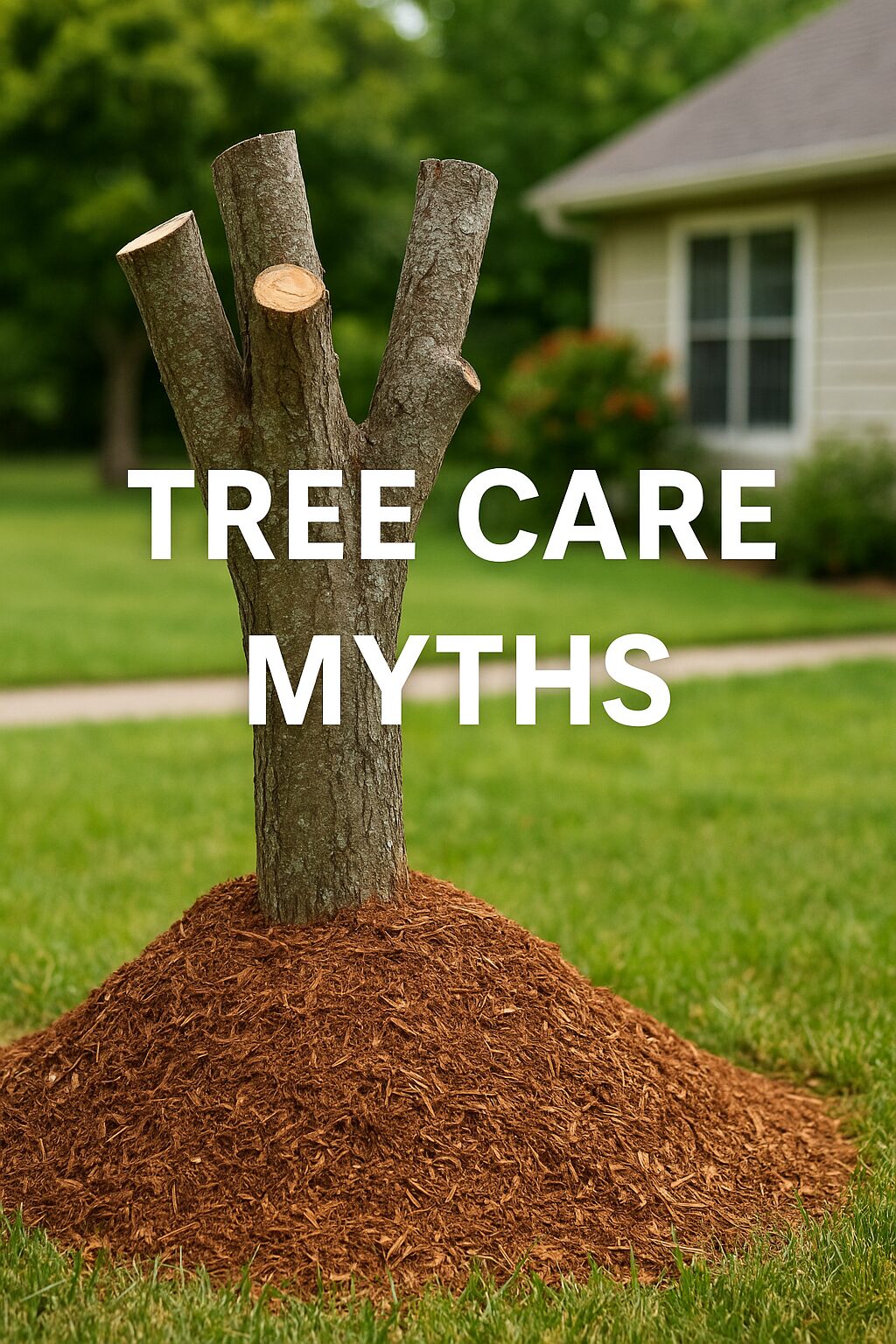
Myth #1: Topping a Tree Makes It Safer
Tree topping — cutting the upper canopy down drastically — is one of the most damaging practices still used today. Many homeowners believe it reduces wind sail and makes trees less likely to fail. In reality, topping does the exact opposite.
Topping creates:
-
Weak, fast-growing shoots with poor attachment
-
Large open wounds that invite decay
-
Rapid regrowth that actually increases wind resistance
-
Long-term structural instability
Within just a few years, topped trees often become more dangerous than they were before. The cost usually shows up later as emergency removals or storm-related failures that could have been avoided with proper structural pruning.
Myth #2: Big Trees Have Deep Taproots
A very common assumption is that large trees are anchored by massive roots deep underground. In reality, most tree roots grow outward, not downward. The majority of active roots live in the top 12 to 24 inches of soil.
This myth leads homeowners to underestimate:
-
Root conflicts with foundations
-
Sewer and drain line intrusion
-
Driveway and sidewalk lifting
-
Soil compaction damage
When homeowners assume roots “can’t possibly be affecting that area,” costly infrastructure damage is often already underway beneath the surface.
Myth #3: Cutting Roots Is No Big Deal
Some homeowners try to solve root problems by cutting large roots near sidewalks, foundations, or fences. While the damage may seem immediate and visible, the consequences often appear months or even years later.
Cutting major structural roots can:
-
Instantly destabilize the tree
-
Increase the risk of blow-over during storms
-
Lead to internal decay
-
Cause slow, irreversible decline
What looks like a small landscaping fix can turn into a five-figure emergency tree removal after the next windstorm.
Myth #4: Mulch Volcanoes Help Trees Grow
Piling mulch high against the trunk — often called a “mulch volcano” — is one of the most common mistakes seen in residential landscapes. While mulch is excellent for soil moisture and temperature control, piling it against the trunk causes serious problems.
Mulch volcanoes can lead to:
-
Trunk rot and fungal infections
-
Insect infestation
-
Girdling root development
-
Oxygen deprivation at the root flare
These issues weaken trees slowly and quietly, often leading to decline that homeowners don’t notice until removal becomes the only option.
Myth #5: Trees Don’t Need Professional Inspection Unless They Look Sick
One of the most expensive misconceptions is waiting until a tree visibly declines before calling an arborist. Many problems develop internally or underground long before outward symptoms appear.
Structural defects, root decay, soil compaction, and early disease often go unnoticed by untrained eyes. By the time canopy dieback, leaning, or cracks in the trunk become obvious, the cost of correction is significantly higher.
Routine inspections catch:
-
Early decay
-
Root instability
-
Pest and disease activity
-
Structural imbalances
-
Soil and drainage problems
Catching these early almost always saves money.
Myth #6: More Water Is Always Better
Overwatering is just as damaging as drought stress. Many Pacific Northwest soils already retain moisture for long periods, especially in shaded areas. Constant irrigation can suffocate roots and create ideal conditions for root rot.
Signs of overwatering include:
-
Yellowing leaves
-
Sudden leaf drop
-
Fungal growth at the base
-
Mushrooms appearing near roots
-
Reduced vigor despite frequent watering
Proper irrigation should match soil type, tree species, and seasonal rainfall — not follow a one-size-fits-all schedule.
Myth #7: If a Tree Is Big, It Must Be Healthy
Size alone doesn’t indicate health. Many large trees survive for years with significant internal decay, compromised roots, or poor structural form. From the outside, everything may look fine — until a major limb fails or the entire tree collapses during a storm.
Large, mature trees require:
-
Regular structural assessment
-
Weight management through pruning
-
Monitoring for decay and defects
-
Root zone protection
Ignoring these needs often leads to costly emergency situations.
How These Myths Turn Into Real Financial Loss
When these misconceptions stack up over time, homeowners often face:
-
Emergency storm removals
-
Structural damage to homes and foundations
-
Repeated plumbing repairs
-
Full driveway or sidewalk replacement
-
Loss of mature canopy value
What could have been handled with affordable, routine tree care turns into major unplanned expenses.
The Truth: Professional Tree Care Is an Investment, Not an Expense
Proper tree care doesn’t mean constant work or endless pruning. It means:
-
Correct timing
-
Correct technique
-
Correct diagnosis
-
Correct long-term planning
When trees are maintained proactively, they live longer, grow stronger, and provide decades of benefit without major financial surprises.
Avoiding Myths Protects Both Your Property and Your Trees
Tree care myths persist because their consequences are often delayed. By the time the damage becomes obvious, the financial impact is already locked in. Replacing a mature tree, repairing a foundation, or fixing a collapsed sewer line is far more expensive than preventing those problems in the first place.
At New Day Arborist, our certified and TRAQ-qualified arborists help homeowners move past outdated advice and into practical, science-based tree care that protects safety, property value, and long-term landscape health.