Southwest Washington’s mild temperatures, abundant rainfall, and rich soils create an ideal environment for trees to thrive. Unfortunately, those same conditions also create a perfect breeding ground for fungal pathogens, bacteria, and pests that can seriously impact tree health. Many homeowners don’t realize their tree is infected until visible decline is already underway — and at that point, treatment can be more complicated and costly.
Understanding the most common tree diseases in our region helps homeowners recognize early warning signs and take action before permanent damage occurs.
Why Our Climate Increases Disease Risk
The Pacific Northwest’s long wet seasons, frequent fog, and high humidity allow spores and pathogens to spread easily. Poor drainage, compacted soils, and shade further increase the likelihood of infection. Trees weakened by drought stress, improper pruning, construction damage, or poor soil conditions are even more susceptible.
When moisture lingers on leaves, bark, and in soil for extended periods, fungi and bacteria have ideal conditions to establish themselves.
Anthracnose: One of the Most Widespread Leaf Diseases
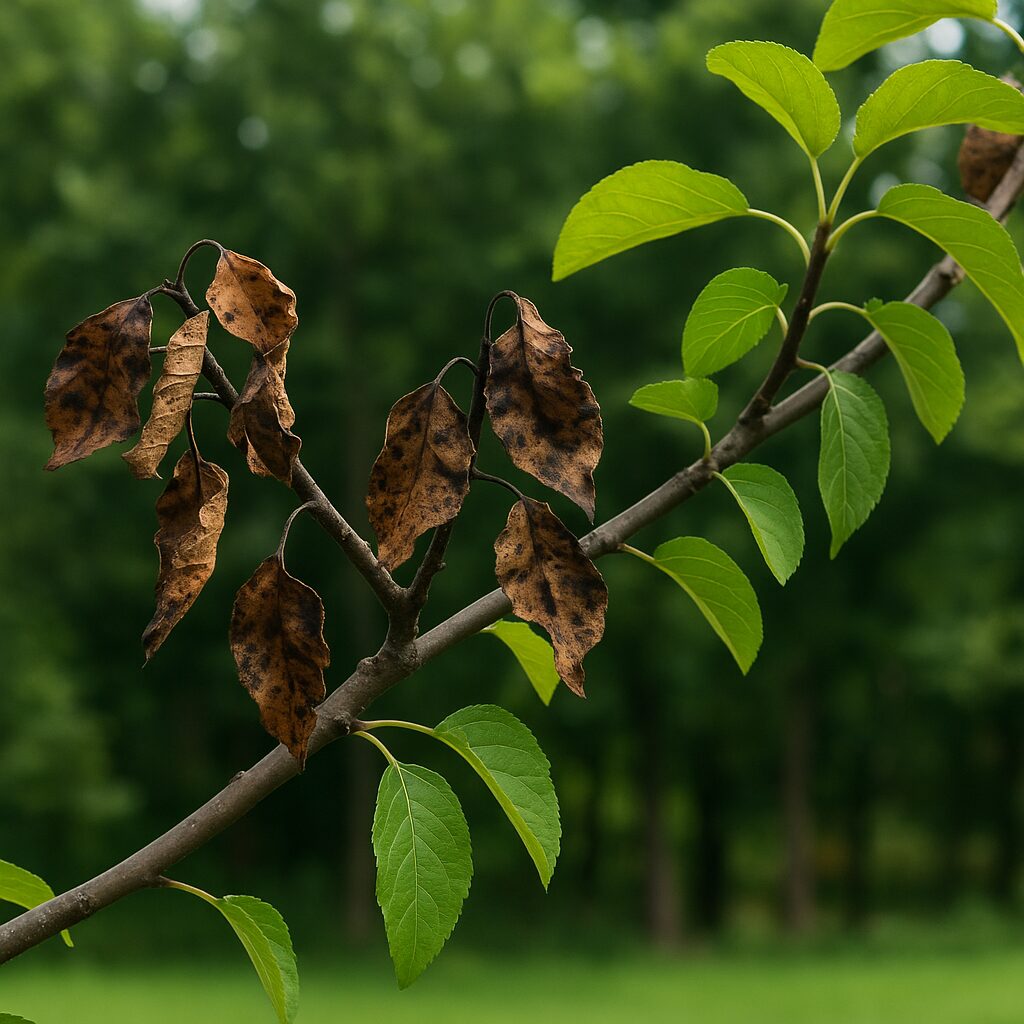
Anthracnose is a fungal disease that commonly affects maples, dogwoods, oaks, and sycamores throughout Southwest Washington. It thrives during cool, wet springs and is often mistaken for frost damage.
Common symptoms include:
-
Irregular brown spots on leaves
-
Leaf curling and early drop
-
Blighted shoots and twigs
-
Thinning canopy later in the season
While anthracnose rarely kills mature trees on its own, repeated yearly infection weakens the tree, reduces photosynthesis, and increases vulnerability to other pests and diseases. Proper pruning, sanitation, and airflow management are key to long-term control.
Root Rot: A Silent Killer Below the Surface
Root diseases are among the most dangerous threats to trees because damage occurs underground long before visible symptoms appear. Several types of root rot affect trees in this region, especially in poorly drained soils.
Early warning signs may include:
-
Thinning canopy
-
Slow growth
-
Yellowing or wilting leaves
-
Mushroom growth near the base
-
Sudden leaning after storms
Root rot compromises structural stability, increasing the risk of whole-tree failure. Once advanced, preservation options become limited, which is why early detection through professional inspection is so important.
Powdery Mildew: A Common But Often Misunderstood Disease
Powdery mildew appears as a white, dusty coating on leaves and young shoots. It commonly affects ornamentals, fruit trees, and shade trees during warm, dry periods with cool nights.
Unlike many fungal diseases, powdery mildew does not require wet leaves to spread. While it rarely kills trees outright, it weakens plants over time and can severely reduce flower and fruit production if left untreated.
Canker Diseases: When Bark Becomes an Entry Point
Cankers are localized areas of dead bark caused by fungal or bacterial infection. They often develop after improper pruning, mechanical injury, or frost damage.
Canker symptoms include:
-
Sunken or cracked bark
-
Oozing sap
-
Dieback above infected areas
-
Sudden limb failure without warning
Because cankers interrupt nutrient flow inside the tree, they can spread and weaken structural wood quickly. Proper pruning techniques and wound management drastically reduce the risk of infection.
Needle Cast: A Major Issue for Conifers
Needle cast is a fungal disease that affects Douglas firs, spruce, and other conifers common throughout the region. Infected trees drop older needles prematurely, giving the appearance of thinning or top-heavy growth.
Signs of needle cast include:
-
Yellow or brown needles
-
Heavy needle drop
-
Bare interior branches
-
Reduced vigor over time
While needle cast usually progresses slowly, it can significantly weaken young and stressed trees if left unmanaged.
Fire Blight: Fast-Moving and Highly Destructive
Fire blight is a bacterial disease that affects fruit trees like apple, pear, and ornamental relatives. It spreads rapidly during warm, wet spring weather and enters through flowers, pruning wounds, or damaged tissue.
Symptoms include:
-
Blackened, scorched-looking leaves
-
Wilted branch tips that curve downward
-
Rapid dieback along shoots
Fire blight can kill young trees quickly and severely weaken mature trees if not treated early with proper sanitation and pruning.
Why Early Detection Makes All the Difference
One of the biggest misconceptions about tree disease is that visible symptoms appear right away. In reality, most infections are well established by the time leaves discolor, branches die back, or mushrooms appear at the base. At that stage, treatment options are more limited and removal may become the safest option.
Routine professional inspections allow arborists to:
-
Identify disease at early stages
-
Determine whether treatment is possible
-
Prevent spread to surrounding trees
-
Protect property from unexpected failure
How Stress Makes Trees More Vulnerable to Disease
Healthy trees have a natural ability to resist infection. Stressed trees do not. The most common stressors in residential landscapes include:
-
Soil compaction
-
Poor drainage
-
Improper pruning
-
Construction damage
-
Drought followed by overwatering
Managing these stress factors through proper pruning, soil care, and site planning drastically reduces disease risk.
Professional Treatment vs. DIY Approaches
While some diseases appear manageable with internet remedies, improper treatment often worsens the problem. Using the wrong fungicides, pruning at the wrong time, or failing to sanitize tools can spread disease rapidly throughout the tree — or even across the entire landscape.
Certified arborists match:
-
Disease type
-
Tree species
-
Season
-
Tree health level
to the correct treatment strategy, increasing success and reducing unnecessary cost.
Protecting Your Trees Starts With Proper Diagnosis
Each tree disease behaves differently, and no two properties share the same soil, drainage, and microclimate conditions. That’s why accurate diagnosis is always the first step. Treating the wrong disease wastes time and often accelerates decline.
At New Day Arborist, our certified and TRAQ-qualified arborists provide scientific diagnosis and region-specific treatment plans to protect tree health, property value, and long-term landscape safety.