Trees add beauty, shade, and value to a property — but when roots grow in the wrong places, they can also cause serious structural problems. Homeowners are often surprised to learn that the damage showing up in a driveway, sidewalk, or plumbing line may actually be coming from below the surface. Because roots grow out of sight, the issues they create often go unnoticed until repairs become expensive.
Understanding how tree roots grow, why they cause damage, and what can be done to prevent it allows homeowners to protect both their trees and their property.
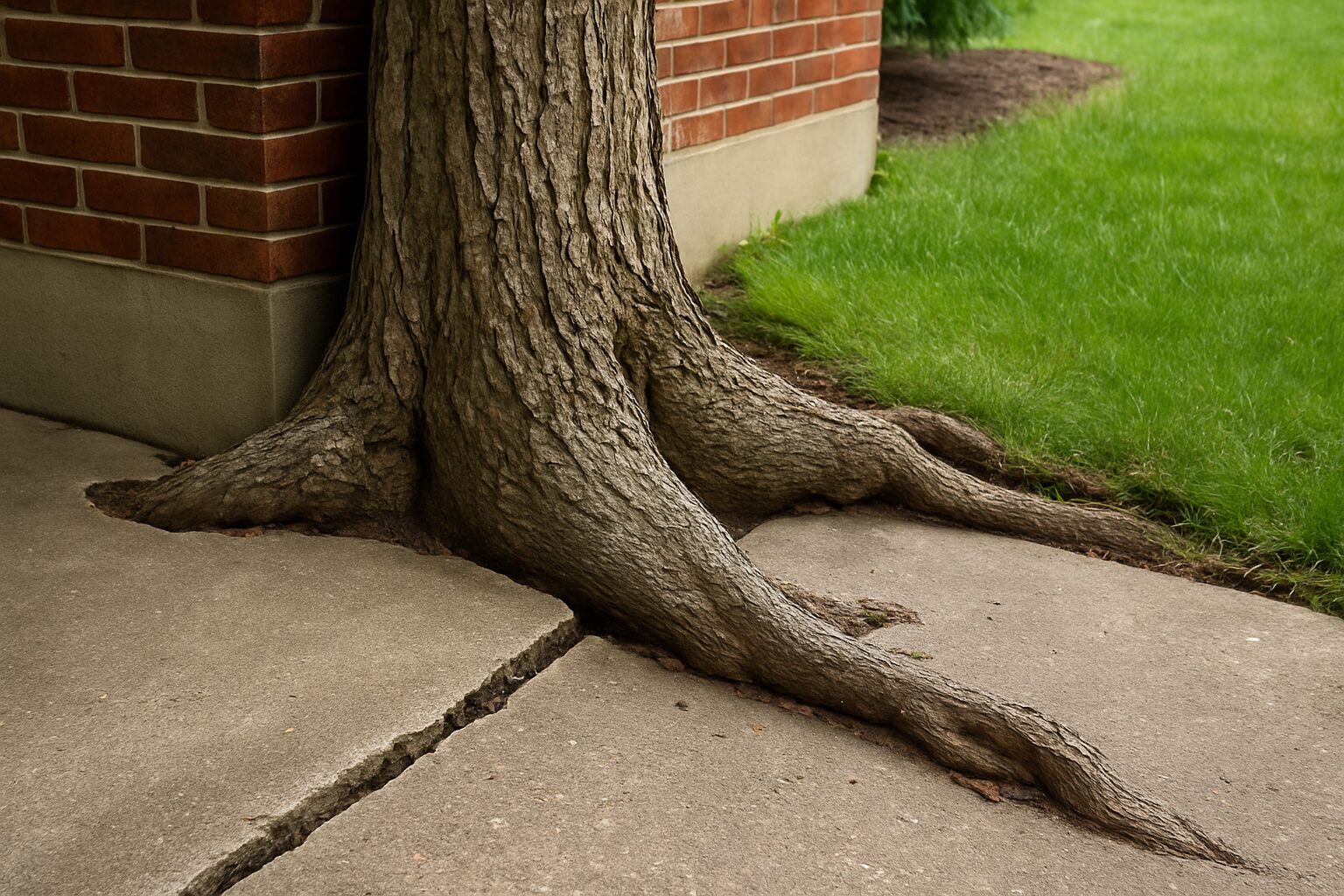
How Tree Roots Actually Grow
A common myth is that tree roots grow straight down like a taproot. In reality, most tree roots grow horizontally, spreading outward far beyond the canopy of the tree. The majority of active roots are found in the top 12 to 24 inches of soil, where oxygen, moisture, and nutrients are most available.
Because roots naturally seek out:
-
Water
-
Oxygen
-
Nutrient-rich soil
they are drawn to areas around foundations, irrigation lines, sewer pipes, and compacted base material beneath concrete surfaces. This is where conflicts often begin.
How Roots Damage Foundations
Tree roots do not usually crush solid concrete foundations on their own. Instead, they exploit existing weaknesses, such as:
-
Small cracks
-
Expansion joints
-
Shifting soil
-
Poor drainage
As roots thicken over time, they exert pressure that can widen cracks and contribute to uneven settling. In clay-heavy soils — common in parts of Southwest Washington — moisture fluctuations caused by roots pulling water from the soil can also lead to shrink–swell cycles that stress foundations.
Signs of potential root-related foundation issues include:
-
New or widening cracks in walls or slabs
-
Uneven floors
-
Doors or windows that suddenly stick
-
Gaps forming between walls and ceilings
How Roots Invade Sewer & Drain Pipes
Sewer and drain lines are one of the most common victims of tree root intrusion. Roots are naturally drawn to the moisture and nutrients inside pipes, especially where:
-
Older clay or concrete pipes are used
-
Joints have shifted
-
Small cracks exist from age or ground movement
Once tiny feeder roots find their way inside, they grow quickly, forming dense root masses that block flow and back up drains. Over time, the pressure from expanding roots can crack or completely collapse aging pipes.
Warning signs of root intrusion in pipes often include:
-
Slow drains throughout the home
-
Gurgling sounds from toilets or sinks
-
Recurring sewer backups
-
Wet, spongy areas in the yard over buried lines
How Roots Damage Driveways, Sidewalks & Patios
Unlike foundations, flat concrete surfaces such as driveways, walkways, and patios are especially vulnerable to root damage. As roots grow in diameter, they push upward against rigid concrete, leading to:
-
Heaving and lifting
-
Cracked slabs
-
Uneven walking surfaces
-
Trip hazards and drainage problems
This type of damage often worsens gradually, making it easy to overlook until concrete replacement becomes the only option.
Which Trees Are Most Likely to Cause Root Damage
Not all trees pose the same level of risk. Fast-growing species with aggressive root systems tend to cause the most frequent conflicts with infrastructure. In the Pacific Northwest, higher-risk root behavior is often seen in:
-
Silver maples
-
Willows
-
Poplars and cottonwoods
-
Alders
-
Some large ornamental species
That doesn’t mean these trees must be removed — but they do require careful placement and proactive management.
Why Cutting Roots Is Risky
Some homeowners attempt to solve root problems by cutting large roots themselves. This can be extremely dangerous for both the tree and the property. Severing major structural roots can:
-
Destabilize the tree
-
Increase blow-over risk during storms
-
Lead to decay entry points
-
Cause long-term decline or death
Root cutting should always be evaluated and performed by a certified arborist who understands load distribution, tree stability, and species-specific tolerance.
Smart Ways to Prevent Root Damage
The best way to avoid costly repairs is through early planning and proactive tree care. Effective prevention strategies include:
-
Proper tree placement: Planting large trees at appropriate distances from foundations and utilities
-
Root barrier installation: Physical barriers that redirect root growth away from structures
-
Routine inspections: Monitoring tree health and root behavior over time
-
Drain line maintenance: Periodic camera inspections for early root intrusion
-
Professional pruning and assessment: Maintaining balanced crowns to reduce root expansion pressure
When addressed early, many conflicts can be managed without major removal or reconstruction.
When Tree Removal Becomes the Right Option
In some cases, the level of root damage is simply too advanced. If structural systems are being actively compromised or if mitigation would leave the tree dangerously unstable, removal may be the safest and most cost-effective solution.
A professional arborist evaluates:
-
The tree’s structural role
-
Extent of root damage
-
Proximity to critical infrastructure
-
Overall tree health
-
Risk to people and property
Only after that assessment can a responsible recommendation be made.
Early Action Saves Thousands in Repairs
Root-related damage often starts small and becomes costly when it’s ignored. A cracked driveway may seem minor today, but that same root could be pressing against a sewer line beneath the yard. Taking action early allows homeowners to:
-
Preserve valuable trees
-
Avoid emergency plumbing repairs
-
Prevent structural damage
-
Reduce storm-related blow-over risk
At New Day Arborist, our certified arborists assess root behavior, tree stability, and structural risk so homeowners can make informed, proactive decisions that protect both their landscape and their home.