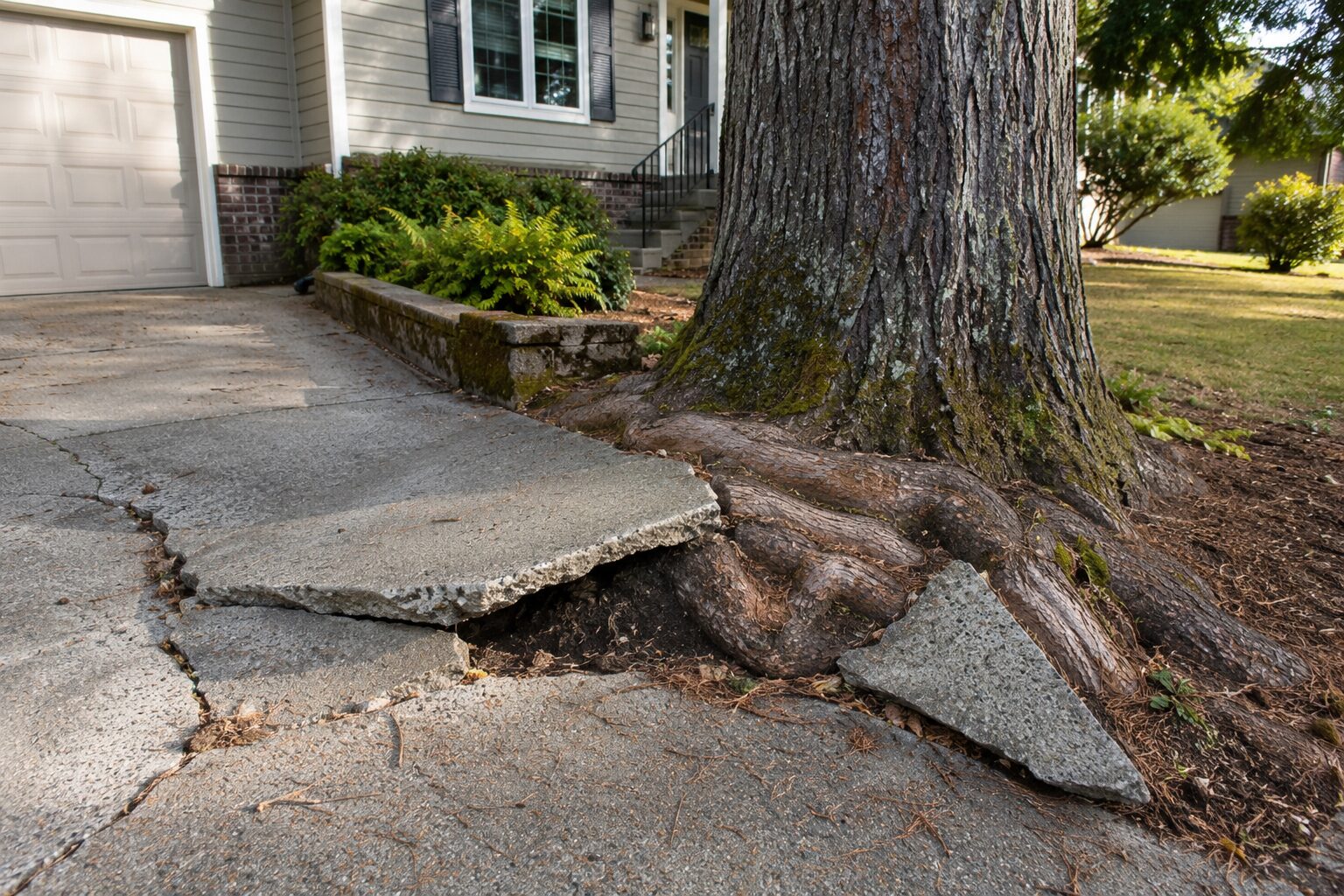
 Trees are one of the most valuable features on many properties throughout the Pacific Northwest. Mature trees provide shade, privacy, beauty, and environmental benefits that can significantly improve a landscape. However, while trees offer many advantages, their root systems can sometimes create serious problems for nearby structures and infrastructure.
Many property owners are surprised to learn that tree roots can affect foundations, driveways, sidewalks, retaining walls, underground pipes, and utility systems over time. In some cases, the damage develops slowly and quietly for years before becoming noticeable. By the time visible symptoms appear, repairs may already be expensive and extensive.
Understanding how tree roots grow and interact with surrounding structures can help property owners identify risks early and make better long-term decisions about tree placement, maintenance, and removal when necessary.
Tree Roots Extend Much Farther Than Most People Realize
One of the biggest misconceptions about trees is that their roots remain close to the trunk. In reality, tree roots often spread much wider than the canopy itself.
Large trees may develop root systems extending:
- 2–3 times the width of the canopy
- Dozens of feet from the trunk
- Near the surface of the soil
- Under driveways, sidewalks, and buildings
While most roots are relatively shallow, they can still exert significant pressure on nearby surfaces and structures as they grow larger over time.
In urban and residential settings where space is limited, roots often encounter foundations, pavement, pipes, and retaining walls as they expand.
Tree Roots Can Damage Driveways and Sidewalks
One of the most common root-related issues property owners notice is damage to pavement surfaces.
As roots increase in diameter over time, they can lift and displace:
- Concrete driveways
- Asphalt driveways
- Sidewalks
- Walkways
- Patios
- Pavers
This occurs because roots naturally seek moisture, oxygen, and available growing space near the soil surface. As they enlarge beneath pavement, they create upward pressure that eventually cracks or lifts the material above.
Common warning signs include:
- Raised sections of pavement
- Cracks in concrete
- Uneven walking surfaces
- Buckling asphalt
- Trip hazards
These issues are especially common with large mature trees planted too close to paved surfaces.
Foundations Can Be Affected by Tree Roots
Tree roots do not typically “break through” healthy concrete foundations directly the way many people imagine. However, they can still contribute to foundation problems under certain conditions.
Roots may affect foundations by:
- Altering soil moisture levels
- Creating soil movement
- Expanding into existing cracks
- Contributing to settling issues
- Increasing pressure near foundation walls
In clay-heavy soils, large trees may absorb substantial amounts of moisture from the surrounding ground. This can cause soil shrinkage and shifting, potentially affecting foundation stability over time.
If cracks or weak points already exist in a foundation, roots may gradually expand into those spaces and worsen existing problems.
The risk often depends on:
- Tree species
- Soil conditions
- Distance from the structure
- Size and age of the tree
- Existing foundation condition
Underground Utilities Are Vulnerable to Root Intrusion
Tree roots are naturally attracted to moisture. Because of this, underground utility lines — especially older pipes — are highly vulnerable to root intrusion.
Roots commonly invade:
- Sewer lines
- Drain pipes
- Septic systems
- Water lines
- Storm drains
Small cracks, loose joints, or aging pipe connections allow roots to enter in search of water and nutrients. Once inside, roots can continue expanding and eventually create:
- Blockages
- Slow drainage
- Pipe damage
- Leaks
- Complete system failure
In many cases, property owners do not realize roots are the problem until backups or drainage issues become severe.
Older clay and concrete pipe systems are particularly susceptible to root intrusion.
Retaining Walls and Hardscapes Can Shift
Tree roots can also impact retaining walls and other hardscape structures.
As roots enlarge beneath or behind walls, they may create pressure that causes:
- Leaning walls
- Cracking
- Separation
- Soil displacement
- Structural instability
Decorative hardscapes such as patios, pavers, and outdoor living spaces may also become uneven or damaged due to root growth beneath the surface.
These problems often develop gradually over many years as the tree matures.
Some Tree Species Cause More Problems Than Others
Not all trees create the same level of root-related risk.
Some species are known for:
- Aggressive root growth
- Large shallow root systems
- Rapid growth rates
- High moisture demand
In the Pacific Northwest, species such as cottonwoods, willows, maples, and certain poplars are more commonly associated with infrastructure conflicts because of their vigorous root systems.
Large conifers like Douglas firs may also create significant root pressure as they mature, especially near retaining walls or paved areas.
Certified arborists evaluate species characteristics carefully when assessing long-term risk.
Proper Tree Placement Is Extremely Important
Many root-related problems begin with poor planting decisions years earlier.
Young trees may seem harmless initially, but as they mature, their root systems expand dramatically. Trees planted too close to:
- Homes
- Driveways
- Septic systems
- Sidewalks
- Utility corridors
- Retaining walls
may eventually create expensive infrastructure conflicts.
Proper tree selection and spacing are some of the best ways to prevent long-term root problems before they begin.
Root Pruning Can Be Risky
Some property owners attempt to solve root problems by cutting roots near structures or pavement. However, improper root pruning can seriously destabilize or damage the tree.
Large roots play critical roles in:
- Structural stability
- Water absorption
- Nutrient uptake
- Overall tree health
Removing major roots without proper evaluation may increase the risk of:
- Tree decline
- Structural instability
- Storm failure
- Tree death
Certified arborists carefully evaluate root systems before recommending pruning or removal options.
Professional Evaluation Helps Prevent Bigger Problems
Root-related tree issues are often complex and require balancing:
- Tree preservation
- Property protection
- Long-term safety
- Structural concerns
- Landscape goals
In some cases, root conflicts can be managed with selective pruning or infrastructure adjustments. In other situations, tree removal may ultimately be the safest and most cost-effective long-term solution.
At New Day Arborist, professional tree evaluations help property owners throughout the Pacific Northwest identify potential root-related risks before they lead to larger structural or utility problems.
Healthy trees and safe infrastructure can often coexist successfully when trees are properly evaluated, maintained, and managed with long-term planning in mind.