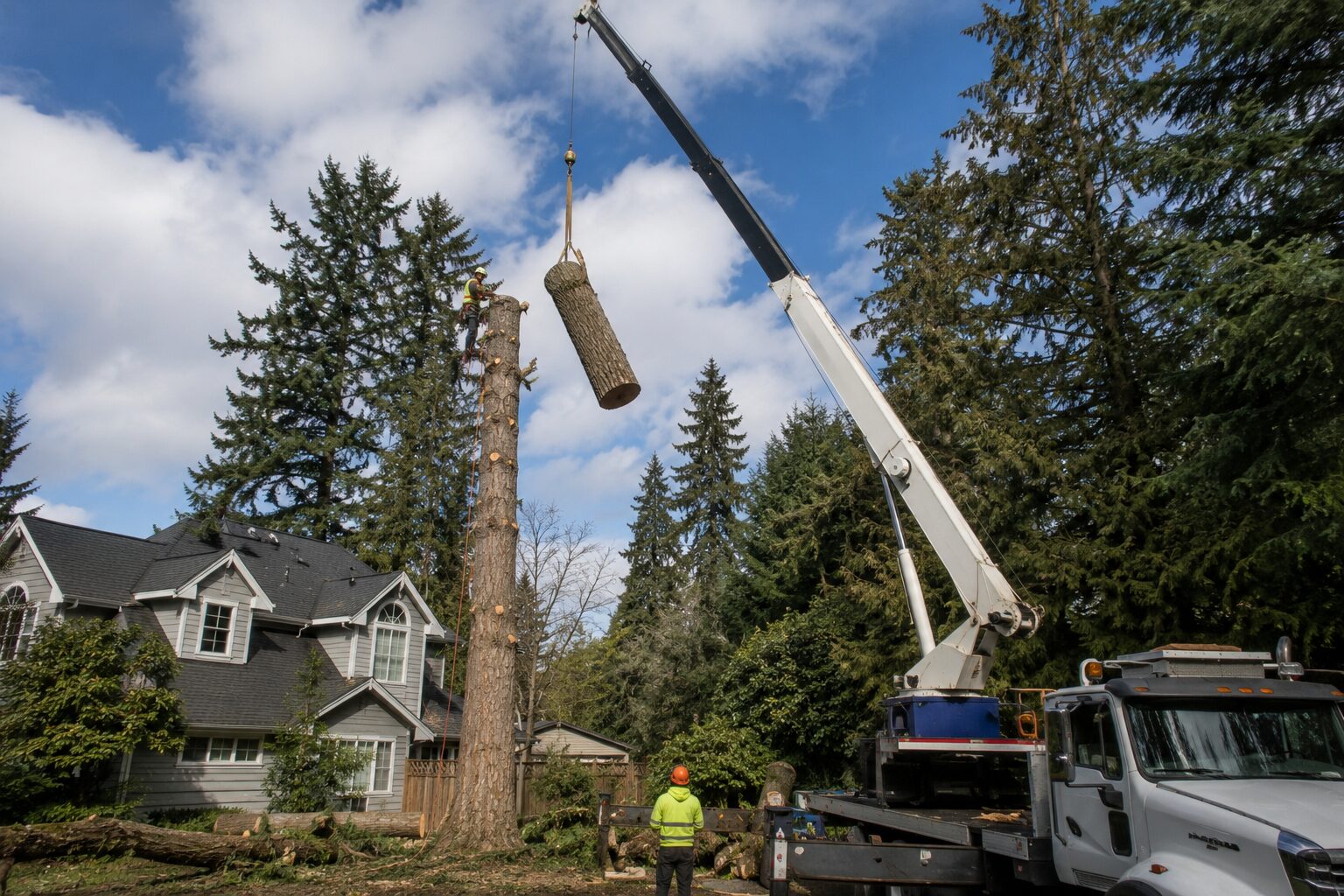
 Large tree removal is one of the most technical and dangerous aspects of arboriculture. While many people imagine tree removal as simply cutting down a tree with a chainsaw, the reality is far more complex — especially when dealing with large mature trees near homes, power lines, roads, fences, or other structures.
In the Pacific Northwest, large trees such as Douglas firs, cedars, cottonwoods, and maples can grow to tremendous heights and sizes. Removing these trees safely requires careful planning, specialized equipment, trained crews, and a detailed understanding of tree structure and rigging techniques.
Professional arborists approach large tree removals with safety as the highest priority. Every removal project is different, and the process often involves far more strategy and coordination than property owners realize.
Why Large Tree Removals Are So Challenging
Large trees carry enormous weight.
Even a single limb from a mature tree can weigh hundreds or thousands of pounds. The trunk sections themselves may weigh several tons depending on the species and size of the tree.
Because of this, large tree removals become especially dangerous when trees are located near:
- Homes
- Garages
- Power lines
- Roads
- Neighboring properties
- Fences
- Vehicles
- Landscaping
- Utility infrastructure
In many residential and urban environments, there is not enough open space to simply fell an entire tree safely in one piece.
Instead, arborists often remove the tree gradually and systematically from the top down.
The First Step Is a Detailed Evaluation
Before any cutting begins, certified arborists carefully evaluate the tree and surrounding area.
This evaluation includes:
- Tree height and diameter
- Species characteristics
- Lean and weight distribution
- Structural defects
- Decay or damage
- Nearby structures
- Wind exposure
- Access limitations
- Escape routes
- Utility locations
- Ground conditions
Every removal plan is based on controlling risk and maintaining as much control over the tree as possible during the process.
The removal strategy may vary significantly depending on whether the tree is healthy, storm-damaged, dead, leaning, or structurally compromised.
Safety Planning Is Critical
Professional tree removal crews spend significant time planning for safety before work begins.
This includes:
- Establishing work zones
- Securing the surrounding area
- Coordinating communication between crew members
- Evaluating fall hazards
- Identifying rigging points
- Preparing lowering systems
- Inspecting equipment
Large tree removals involve multiple hazards simultaneously, including:
- Falling limbs
- Heavy wood sections
- Chainsaw operation
- Working at height
- Rigging tension
- Equipment movement
Professional arborists follow strict safety procedures to minimize risk to both workers and property owners.
Many Large Trees Are Removed in Sections
In tight spaces, large trees are rarely removed all at once.
Instead, arborists typically dismantle the tree piece by piece. This process usually begins with:
- Removing smaller outer branches
- Reducing canopy weight
- Lowering larger limbs carefully
- Removing upper trunk sections
- Working downward gradually
This top-down approach allows crews to maintain control over each section being removed.
Large limbs are often lowered using ropes and rigging systems rather than simply dropping them freely. This helps prevent damage to nearby structures and landscaping.
Rigging Systems Help Control Heavy Wood
One of the most important parts of large tree removal is rigging.
Professional arborists use specialized rigging systems to safely lower large limbs and trunk sections in a controlled manner. Rigging may involve:
- High-strength ropes
- Pulleys
- Friction devices
- Slings
- Lowering devices
- Mechanical advantage systems
These systems allow crews to carefully guide heavy sections of wood away from structures and safely to the ground.
Proper rigging requires extensive training and experience because improperly loaded ropes or anchor points can create dangerous failures under extreme tension.
Crane-Assisted Tree Removal Improves Safety
Some large trees are too hazardous or confined for traditional climbing and rigging methods alone.
In these situations, crane-assisted removal may be the safest option.
Cranes are commonly used when:
- Trees are severely damaged
- Trees are leaning dangerously
- Access is limited
- Trees overhang homes
- Structural defects make climbing unsafe
- Large sections need precise control
During crane-assisted removal, arborists attach sections of the tree directly to the crane before cutting them free. The crane then lifts the pieces safely away from the property.
This method often:
- Reduces risk
- Minimizes property impact
- Speeds up removal
- Prevents additional damage
- Improves overall safety
Crane removals require close coordination between the arborist crew and crane operator throughout the project.
Dead or Damaged Trees Require Extra Caution
Dead trees are often more dangerous to remove than healthy trees.
As wood dries and decays, it becomes:
- Brittle
- Unpredictable
- Structurally unstable
Dead limbs may break unexpectedly under weight or vibration. Decayed trunks may no longer support climbers safely.
Storm-damaged trees also create additional hazards because cracks, splits, and partially failed limbs may remain under tension.
Professional arborists evaluate these conditions carefully before determining the safest removal method.
Specialized Equipment Makes Removal Safer
Modern tree removal relies heavily on specialized equipment designed for safety and efficiency.
Depending on the project, crews may use:
- Climbing saddles and ropes
- Bucket trucks
- Cranes
- Chainsaws
- Rigging systems
- Wood chippers
- Mini skid steers
- Log loaders
This equipment helps reduce physical strain while improving precision and control during removals.
Properly maintained professional equipment is a major part of safe arboriculture operations.
Cleanup and Site Protection Matter Too
Safe tree removal also includes protecting the property throughout the process.
Professional crews often take steps such as:
- Using plywood to protect lawns
- Managing debris carefully
- Avoiding damage to landscaping
- Controlling heavy log movement
- Cleaning work areas thoroughly
The goal is not only removing the tree safely but also minimizing disruption to the surrounding property.
Experience Matters in Large Tree Removal
Large tree removal is highly technical work that should never be underestimated.
Improper removal techniques can lead to:
- Serious injuries
- Property damage
- Equipment accidents
- Utility hazards
- Uncontrolled tree failure
At New Day Arborist, professional large tree removals are performed using trained crews, specialized equipment, and carefully planned safety procedures designed to protect both people and property.
Whether using advanced rigging systems or crane-assisted removals, professional arborists help ensure that even the most complex tree removals are handled as safely and efficiently as possible.